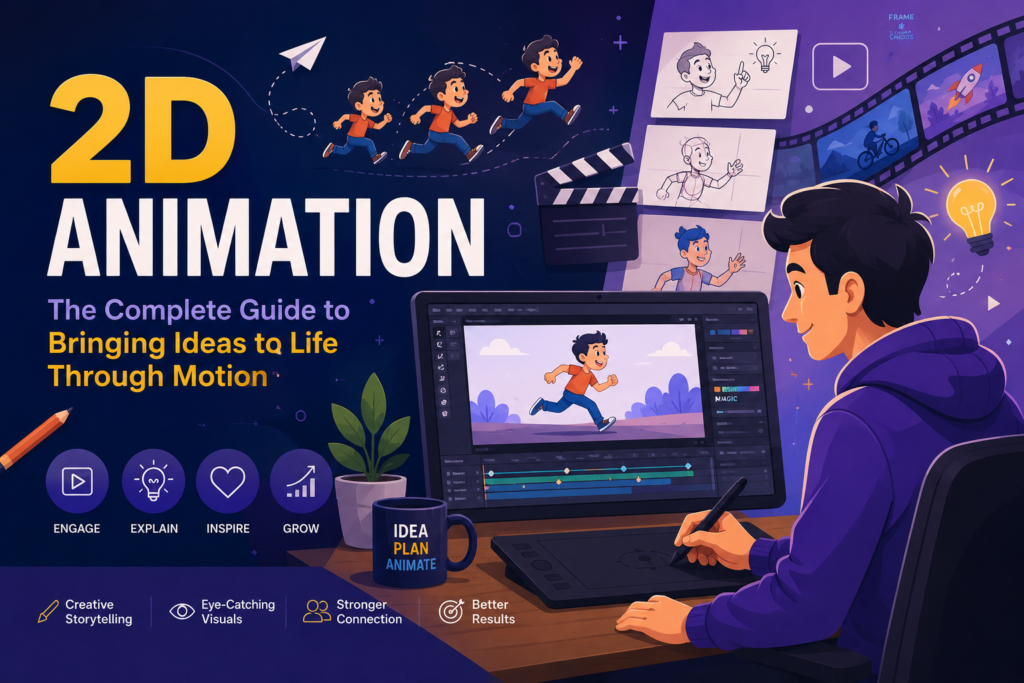
In a world where visual content dominates digital marketing, entertainment, education, and social media, 2D animation continues to be one of the most powerful ways to communicate ideas. From engaging explainer videos and memorable brand advertisements to educational content and animated social media posts, 2D animation helps businesses and creators transform complex concepts into compelling visual stories.
Despite the rapid growth of 3D graphics and AI-generated content, 2D animation remains highly relevant in 2026. Its simplicity, versatility, cost-effectiveness, and creative freedom make it a preferred choice for startups, established businesses, educators, content creators, and entertainment studios alike.
Whether you’re looking to market your business, educate your audience, or build a memorable brand identity, understanding the value of 2D animation can help you create content that captures attention and delivers results.
In this guide, we’ll explore what 2D animation is, its benefits, applications, production process, and why it’s still one of the smartest investments for modern businesses.
What Is 2D Animation?
2D animation is the process of creating movement in a two-dimensional space using illustrations, shapes, characters, typography, and graphic elements. Unlike 3D animation, which adds depth and realism, 2D animation focuses on height and width while using motion to tell stories and communicate ideas.
A 2D animation project may include:
- Animated characters
- Motion graphics
- Kinetic typography
- Icons and illustrations
- Infographics
- Logo animations
- Product demonstrations
- Explainer videos
- Social media animations
By combining design, timing, sound, and storytelling, 2D animation creates engaging visual experiences that are easy to understand and enjoyable to watch.
Why 2D Animation Is Still Popular in 2026
Although technology has introduced new creative possibilities, 2D animation continues to thrive because it is adaptable, accessible, and effective across industries.
Here are a few reasons why businesses still choose 2D animation:
Cost-Effective Production
Compared to 3D animation or live-action video production, 2D animation is generally faster and more affordable. It doesn’t require actors, filming locations, expensive equipment, or complex rendering, making it ideal for businesses with limited budgets.
Easy to Understand
2D animation simplifies information using clean visuals and smooth transitions. It can explain products, services, or concepts in a way that is engaging and easy for audiences to follow.
Creative Freedom
Anything you can imagine can be animated. Whether it’s abstract concepts, futuristic technology, or educational diagrams, 2D animation gives creators unlimited flexibility.
Faster Turnaround
Businesses often need content quickly for marketing campaigns or product launches. Because the production process is more streamlined than live-action or 3D projects, 2D animation allows brands to publish high-quality content faster.
Benefits of 2D Animation for Businesses
1. Captures Attention Quickly
Online users scroll through large amounts of content every day. Movement naturally attracts the human eye, making animated content more likely to stop users from scrolling.
An engaging animation can communicate your message within seconds, increasing the chances that viewers will continue watching.
2. Simplifies Complex Ideas
Businesses in industries such as technology, healthcare, finance, education, and manufacturing often need to explain complicated products or services.
Instead of presenting long paragraphs of text, 2D animation uses illustrations, icons, and storytelling to simplify information and make it easier to understand.
Explainer videos are one of the most common examples of this approach.
3. Strengthens Brand Identity
Professional 2D animation incorporates your brand’s:
- Logo
- Colors
- Typography
- Design style
- Messaging
- Visual personality
Using these elements consistently across all marketing materials helps build recognition and trust.
A memorable animation style can become a key part of your brand identity.
4. Increases Customer Engagement
Animated content generally performs better than static graphics across digital platforms.
2D animation encourages users to:
- Watch longer
- Share content
- Comment on posts
- Click advertisements
- Visit websites
- Remember your brand
Higher engagement often leads to increased visibility and improved marketing performance.
5. Improves Conversion Rates
Customers are more likely to take action when they understand your product or service.
A well-designed animated explainer video can answer common questions, demonstrate value, and build trust—all within a short amount of time.
This helps reduce hesitation and encourages viewers to make purchasing decisions.
Where Is 2D Animation Used?
One of the biggest strengths of 2D animation is its versatility.
Businesses use it across a wide range of platforms and industries.
Social Media Marketing
Animated Reels, Stories, promotional posts, and short videos help brands stand out on Instagram, Facebook, LinkedIn, YouTube Shorts, and TikTok.
Explainer Videos
Many companies use 2D animation to explain products, software, or services in a simple and engaging way.
Corporate Presentations
Instead of static slides, businesses add animated graphics and transitions to create professional presentations that keep audiences engaged.
Educational Content
Schools, universities, online learning platforms, and training organizations use 2D animation to explain lessons and simplify complex subjects.
Healthcare
Hospitals and healthcare providers create animated videos to educate patients, explain procedures, and promote health awareness.
Product Marketing
Animated product showcases highlight features, benefits, and functionality without requiring expensive live-action production.
Entertainment
Television shows, web series, children’s content, and digital storytelling continue to rely heavily on 2D animation because of its artistic flexibility.
Popular Styles of 2D Animation
Different projects require different visual styles. Choosing the right style depends on your audience, objectives, and brand identity.
Some of the most popular styles include:
- Motion Graphics
- Character Animation
- Whiteboard Animation
- Flat Illustration Animation
- Minimalist Animation
- Kinetic Typography
- Cartoon Animation
- Infographic Animation
- Isometric Animation
- Mixed Media Animation
Each style offers unique advantages and can be customized to suit your communication goals.
The 2D Animation Production Process
Creating professional animation involves several stages.
1. Concept Development
Every project begins with defining objectives, identifying the target audience, and planning the message.
2. Script Writing
A strong script provides the foundation for the animation by organizing information into a clear and engaging story.
3. Storyboarding
Storyboards outline each scene, helping clients visualize the final animation before production begins.
4. Illustration Design
Designers create characters, icons, backgrounds, and visual assets that align with the brand identity.
5. Animation
The illustrations are brought to life using movement, transitions, timing, and visual effects.
6. Voiceover and Sound Design
Professional narration, music, and sound effects enhance storytelling and create a more immersive viewing experience.
7. Final Editing
The animation is polished, color-corrected, optimized for different platforms, and exported in the required formats.
Choosing the Right 2D Animation Software
Professional motion designers use a variety of tools depending on project requirements.
Popular software includes:
- Adobe After Effects
- Adobe Illustrator
- Adobe Animate
- Toon Boom Harmony
- Moho Animation
- Blender (for hybrid workflows)
- Cinema 4D (combined with motion graphics)
- Adobe Premiere Pro
These tools allow designers to create everything from simple social media animations to high-end commercial advertisements.
Why Hire a Professional 2D Animator?
While many online tools offer drag-and-drop animation templates, they often lack originality and strategic thinking.
A professional 2D animator understands:
- Storytelling
- Animation principles
- Branding
- Typography
- Color psychology
- Visual hierarchy
- Marketing objectives
- Audience behavior
They don’t simply create movement—they create animations that communicate effectively and support business goals.
Professional animation also ensures higher production quality, stronger branding, and better long-term results.
Future Trends in 2D Animation
The future of 2D animation is evolving alongside advancements in technology.
Some emerging trends include:
- AI-assisted animation workflows
- Personalized animated content
- Interactive web animations
- Micro-animations for user interfaces
- Hybrid 2D and 3D visuals
- Motion-first social media campaigns
- Animated infographics
- Data-driven visual storytelling
As digital communication becomes increasingly visual, 2D animation will continue to play a central role in helping businesses engage audiences and simplify information.
Final Thoughts
2D animation remains one of the most effective tools for communicating ideas in a creative, engaging, and memorable way. Its ability to simplify complex concepts, strengthen brand identity, and capture audience attention makes it valuable across industries—from marketing and education to healthcare, entertainment, and technology.
Unlike many content formats that quickly become outdated, 2D animation continues to evolve with modern design trends and digital platforms. Whether you’re creating an explainer video, launching a new product, promoting your brand on social media, or educating your audience, professionally crafted animation can significantly improve engagement and conversion rates.
For businesses looking to stand out in an increasingly competitive digital landscape, investing in high-quality 2D animation is more than a creative decision—it’s a strategic one. By combining compelling storytelling, thoughtful design, and purposeful motion, 2D animation helps brands connect with audiences, build trust, and leave a lasting impression.
If your goal is to create content that informs, inspires, and drives results, 2D animation is a powerful solution that continues to deliver value in 2026 and beyond.