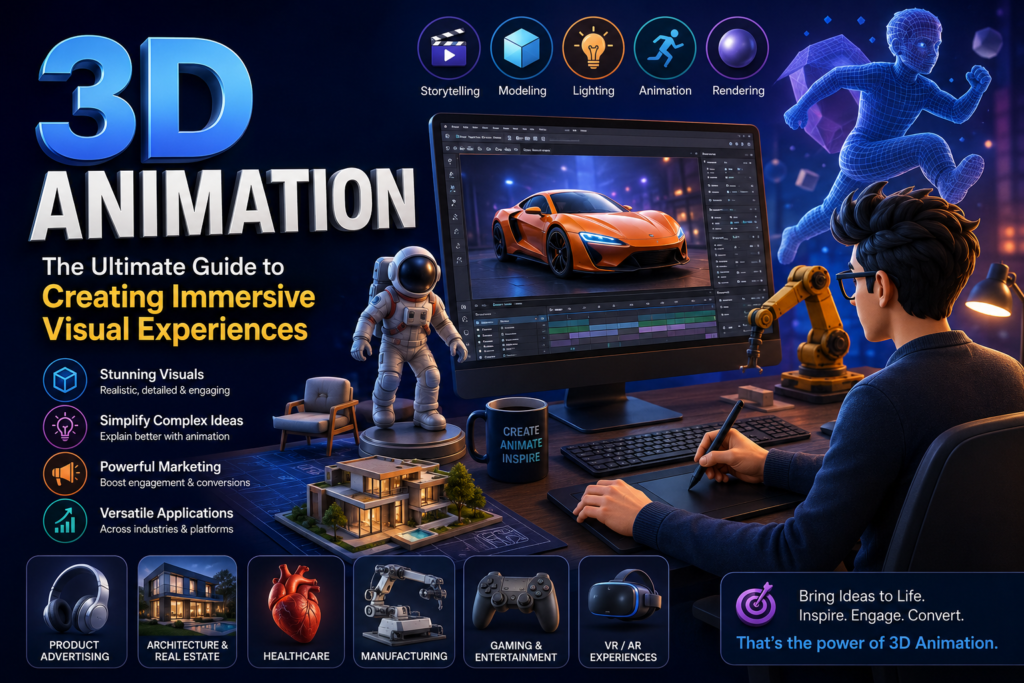
In today’s digital-first world, businesses are constantly looking for innovative ways to capture attention, communicate complex ideas, and create memorable customer experiences. Among the many visual storytelling tools available, 3D animation has emerged as one of the most powerful and versatile solutions. From blockbuster films and video games to product advertisements, architectural visualizations, and medical simulations, 3D animation is transforming how brands connect with audiences.
With advancements in rendering technology, real-time graphics, and AI-assisted workflows, creating high-quality 3D visuals has become more accessible than ever. Businesses of all sizes are using 3D animation to showcase products, explain services, visualize concepts, and deliver engaging marketing campaigns that stand out in crowded digital spaces.
Whether you’re a startup launching a new product or an established brand looking to elevate your marketing strategy, understanding the value of 3D animation can help you create content that inspires, informs, and converts.
In this guide, we’ll explore what 3D animation is, its benefits, applications, production process, and why it continues to shape the future of digital communication.
What Is 3D Animation?
3D animation is the process of creating moving images in a three-dimensional digital environment. Unlike 2D animation, which works on a flat plane, 3D animation adds depth, perspective, lighting, and realistic movement to objects and characters.
Artists create digital models, apply textures and materials, set up lighting, animate movement, and render scenes to produce lifelike visuals. The result is an immersive experience that closely resembles real-world objects while allowing complete creative freedom.
Common types of 3D animation include:
- Product animations
- Character animation
- Architectural visualization
- Medical animation
- Industrial simulations
- Motion graphics with 3D elements
- Visual effects (VFX)
- Explainer videos
- Gaming cinematics
- Virtual reality experiences
Because of its realism and flexibility, 3D animation has become a preferred choice for industries that need to present products or concepts with precision and visual impact.
Why 3D Animation Matters in 2026
Consumer expectations have changed dramatically. Today’s audiences expect visually rich, interactive, and engaging content across websites, social media, advertisements, and digital experiences.
At the same time, businesses need to explain products faster, differentiate themselves from competitors, and create marketing assets that can be used across multiple platforms.
3D animation addresses these needs by offering:
- Photorealistic visuals
- Dynamic storytelling
- Unlimited creative possibilities
- Reusable digital assets
- Interactive experiences
- High-quality product demonstrations
As AI and real-time rendering technologies continue to improve, producing professional 3D animation is becoming faster and more efficient, making it an increasingly valuable investment for brands.
Benefits of 3D Animation for Businesses
1. Creates Stunning Visual Realism
One of the biggest advantages of 3D animation is its ability to produce highly realistic visuals.
Products can be displayed from every angle, materials can accurately reflect light, and environments can closely resemble real-world locations.
This level of realism helps businesses present products before manufacturing, making it especially valuable for product launches and concept presentations.
2. Simplifies Complex Concepts
Many industries deal with products or systems that are difficult to explain through text or photography alone.
3D animation allows businesses to visualize:
- Internal product mechanisms
- Manufacturing processes
- Medical procedures
- Engineering systems
- Software workflows
- Scientific concepts
By showing rather than telling, businesses improve understanding and build customer confidence.
3. Improves Product Marketing
Traditional product photography has limitations.
With 3D animation, marketers can create cinematic product showcases featuring rotating views, exploded assemblies, transparent materials, and dramatic lighting.
This allows potential customers to explore products in ways that static images simply cannot provide.
Industries such as electronics, automotive, furniture, and consumer goods increasingly rely on 3D animation for product marketing.
4. Strengthens Brand Identity
Professional 3D animation reflects innovation and attention to detail.
Businesses can incorporate:
- Brand colors
- Logo animations
- Signature transitions
- Custom environments
- Unique visual styles
Consistent use of these elements creates memorable brand experiences that strengthen customer recognition and trust.
5. Boosts Customer Engagement
Animated content naturally attracts attention.
Adding realistic movement, cinematic camera angles, and visual effects keeps viewers engaged for longer periods.
Higher engagement often results in:
- Increased video watch time
- Better social media performance
- Higher website interaction
- More inquiries and leads
- Improved customer retention
This makes 3D animation a valuable asset for digital marketing campaigns.
Where Is 3D Animation Used?
The versatility of 3D animation makes it useful across nearly every industry.
Product Advertising
Businesses use 3D animation to introduce new products, demonstrate features, and create premium advertising campaigns.
Architecture and Real Estate
Architects and developers create realistic walkthroughs, interior visualizations, and virtual property tours before construction begins.
Healthcare
Medical institutions use 3D animation to explain surgeries, anatomy, pharmaceutical products, and healthcare procedures.
Manufacturing
Industrial companies visualize machinery, production processes, and assembly instructions for clients and employees.
Education
Schools, universities, and online learning platforms use 3D animation to simplify scientific, engineering, and technical concepts.
Entertainment
Films, television, streaming platforms, and gaming continue to rely heavily on 3D animation for characters, environments, and visual effects.
eCommerce
Online retailers use 360-degree product animations to help customers understand products before making purchasing decisions.
Popular Types of 3D Animation
Businesses can choose from various animation styles depending on their objectives.
Popular options include:
- Product Visualization
- Character Animation
- Architectural Walkthroughs
- Medical Animation
- Mechanical Animation
- Motion Graphics with 3D Elements
- Visual Effects (VFX)
- Logo Animation
- CGI Commercials
- Virtual Reality Experiences
Each style serves different communication goals and marketing strategies.
The 3D Animation Production Process
Creating professional 3D animation involves multiple stages.
1. Concept Development
The project begins with defining objectives, identifying the target audience, and creating a creative direction.
2. Script and Storyboard
A script outlines the narrative, while storyboards visualize each scene before production starts.
3. 3D Modeling
Artists create digital versions of products, characters, or environments using specialized software.
4. Texturing and Materials
Models receive realistic colors, materials, and surface details that enhance visual quality.
5. Lighting
Professional lighting creates mood, realism, and depth while highlighting important features.
6. Animation
Objects and characters are animated using keyframes, physics simulations, and motion principles to create smooth, lifelike movement.
7. Rendering
Powerful computers process each frame to generate the final high-quality visuals.
8. Editing and Sound Design
Music, voiceovers, sound effects, and final edits complete the animation before delivery.
Software Used for 3D Animation
Professional studios use advanced software depending on project requirements.
Popular tools include:
- Blender
- Autodesk Maya
- Cinema 4D
- 3ds Max
- Houdini
- Unreal Engine
- Adobe After Effects
- Substance 3D Painter
- ZBrush
- DaVinci Resolve
These applications enable artists to create everything from realistic product renders to cinematic visual effects.
Why Hire a Professional 3D Animation Studio?
While beginner-friendly software has become more accessible, creating high-quality 3D animation still requires specialized expertise.
Professional animators understand:
- Visual storytelling
- Modeling techniques
- Lighting principles
- Material creation
- Camera composition
- Animation timing
- Rendering optimization
- Marketing strategy
- Brand consistency
Working with experienced professionals ensures that animations not only look visually impressive but also communicate your message effectively.
Emerging Trends in 3D Animation
The future of 3D animation is being shaped by exciting technological advancements.
Key trends include:
- AI-assisted animation workflows
- Real-time rendering with game engines
- Digital twins for industrial visualization
- Interactive product experiences
- Augmented Reality (AR) integration
- Virtual Reality (VR) content
- Hyper-realistic CGI advertising
- Cloud-based collaboration
- Procedural animation
- Immersive brand storytelling
These innovations are making high-quality 3D content faster to produce and more engaging for audiences.
Final Thoughts
3D animation has become an essential tool for businesses that want to create visually compelling content and communicate ideas with clarity and impact. Its ability to combine realism, creativity, and storytelling makes it valuable across industries, from product marketing and architecture to healthcare, education, manufacturing, and entertainment.
As customer expectations continue to rise in 2026, brands must deliver experiences that are both informative and visually engaging. High-quality 3D animation allows businesses to showcase products from every angle, explain complex concepts with ease, and create immersive campaigns that capture attention in competitive digital environments.
Whether you’re launching a new product, presenting an architectural project, demonstrating a medical procedure, or building a premium brand identity, investing in professional 3D animation can help you stand out and achieve measurable results.
In an increasingly visual world, 3D animation is more than a creative asset—it’s a strategic investment that enhances communication, builds trust, and drives business growth. By combining innovative technology with expert storytelling, businesses can create experiences that leave a lasting impression on their audience.